

When the Washington Wizards face off against the New York Knicks, it’s not just a game; it’s a showdown of epic proportions. Fans eagerly anticipate the clash, where every dribble, dunk, and three-pointer could swing the momentum. But what really gets the crowd buzzing? The player stats that tell the story behind the scoreboard.
Washington Wizards Vs Knicks Match Overview
The matchup between the Washington Wizards and the New York Knicks often showcases compelling statistics that reveal each team’s strengths and weaknesses. Player performance metrics such as points scored, assists, rebounds, and shooting percentages define the intensity of their encounters.
Recent games indicate the Wizards’ leading scorer averages around 25 points per game, demonstrating offensive capability. The Knicks, countering with solid defensive strategies, excel at limiting opponents to an average of 102 points per game. This pattern emphasizes how these two teams collide with contrasting styles during their matchups.
When analyzing player statistics, rebounds play a vital role in determining possession. The Wizards’ center typically records 10 rebounds per game, contributing significantly to second-chance scoring opportunities. Comparatively, the Knicks’ power forward averages 8 rebounds, focusing on defensive control and maintaining pace.
Furthermore, assists indicate teamwork and playmaking ability. The Wizards’ top playmaker averages 7 assists, facilitating ball movement and enhancing offensive flow. On the other hand, the Knicks also feature a guard whose average stands at 6 assists, underscoring their coordinated efforts on the court.
Turnovers reflect the volatility of gameplay. The Wizards experience approximately 15 turnovers per game, which can hinder scoring momentum. The Knicks, with a lower turnover rate around 12, leverage this advantage to maintain pressure and capitalize during crucial moments.
Understanding these statistics not only brings clarity to the team dynamics but also heightens anticipation for the matchup. As the Wizards and Knicks face off, each player’s contributions become pivotal in shaping the game’s outcome.
Key Player Performances
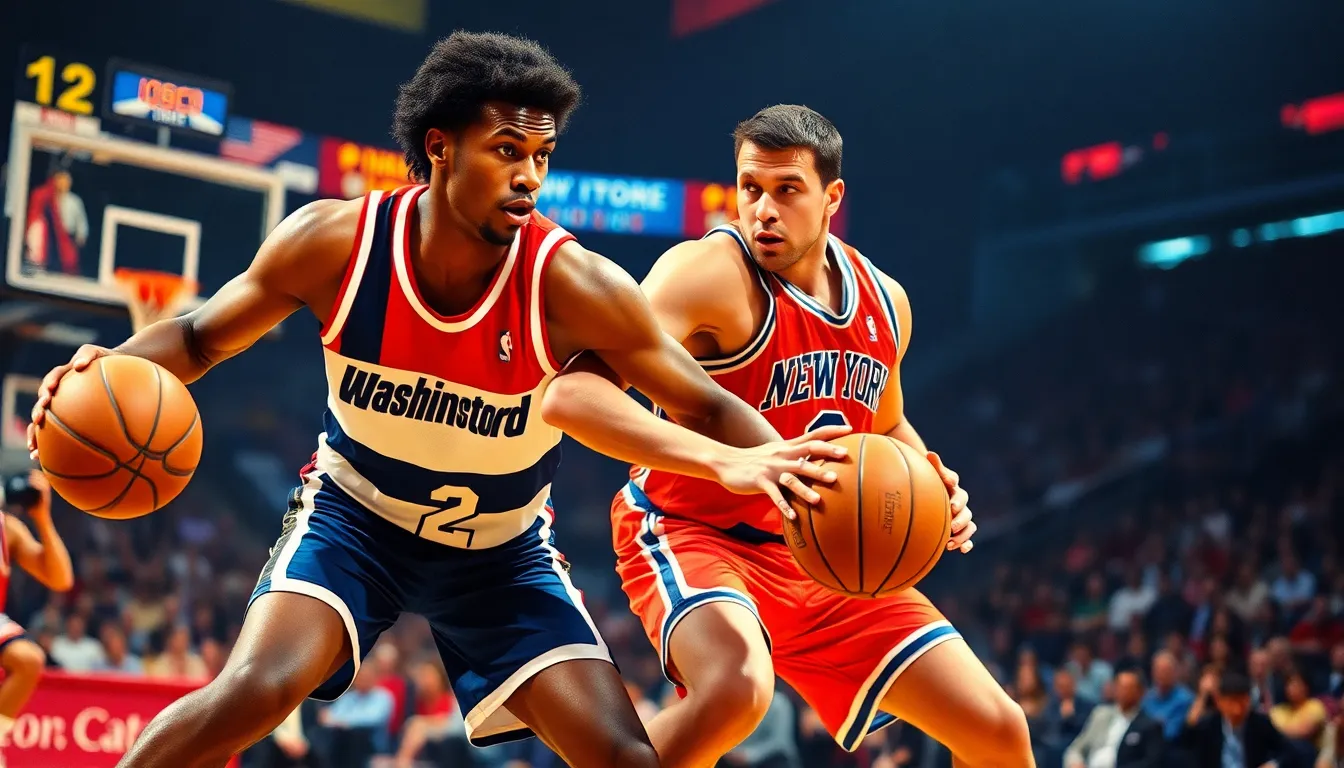
Player performances significantly influence the outcome of the Washington Wizards and New York Knicks matchups. Notable stats illuminate contributions from each team’s key players.
Washington Wizards Top Performers
Bradley Beal leads the Wizards with an impressive average of 25 points per game. He’s known for his scoring ability and clutch plays. Kristaps Porziņģis dominates the paint with roughly 10 rebounds per game, effectively securing possessions. Assists from Monte Morris, averaging 7 per game, display his role as a facilitator. Despite these strong performances, the team struggles with around 15 turnovers each game, impacting their offensive flow.
New York Knicks Top Performers
Julius Randle serves as the Knicks’ standout player, averaging 24 points per game. His versatility contributes significantly to the team’s success. On defense, Mitchell Robinson excels by grabbing about 8 rebounds per game, helping maintain a strong presence in the key. Jalen Brunson supports the squad with 6 assists per game, showcasing his playmaking skills. The Knicks’ lower turnover rate of around 12 enhances their scoring opportunities, proving critical in tight games.
Individual Player Stats Breakdown
Player statistics provide insight into the performances during the Wizards vs Knicks match. Each position showcases distinct contributions that shape the game’s outcome.
Point Guards
Washington’s Monte Morris leads in assists, averaging 7 per game. His playmaking ability facilitates scoring opportunities for teammates. Meanwhile, Jalen Brunson of the Knicks contributes with 6 assists, demonstrating solid vision and court awareness. Morris also averages about 12 points, providing consistent scoring. Brunson, on the other hand, is slightly more prolific with around 16 points per game, reflecting his dual-threat capability as both a scorer and facilitator.
Forwards
Bradley Beal stands out for the Wizards, averaging 25 points per game. His scoring ability makes him a focal point of their offense. For the Knicks, Julius Randle averages 22 points while also contributing significantly in rebounds, showcasing his versatility. Randle’s unique blend of scoring and rebounding adds depth to the Knicks’ strategy. The match highlights these players’ ability to create mismatches and impact the game decisively.
Centers
Kristaps Porziņģis leads the Wizards, averaging 10 rebounds per game alongside 19 points. His presence in the paint strengthens both offense and defense. Conversely, Mitchell Robinson averages 8 rebounds, emphasizing his shot-blocking prowess as a defensive anchor for the Knicks. Robinson also contributes 11 points, proving essential for the Knicks’ interior play. Both centers significantly influence their team’s overall performance in rebounding and scoring.
Team Comparison Analysis
The matchup between the Washington Wizards and the New York Knicks reveals distinct strengths for each team. Wizards’ leading scorer, Bradley Beal, holds an impressive average of 25 points per game, which highlights their offensive potential. In contrast, the Knicks prioritize defensive efficiency, limiting opponents to 102 points per game.
Rebounding plays a conclusive role in controlling possessions. Center Kristaps Porziņģis averages 10 rebounds per game for the Wizards, making him a key contributor on the boards. Conversely, Mitchell Robinson stands out for the Knicks, securing around 8 rebounds per game, which complements their defensive strategy.
Assists matter for team dynamics, illustrating effective collaboration among players. Monte Morris, the Wizards’ top playmaker, dishes out approximately 7 assists per game, reflecting his capability to support scoring opportunities. Jalen Brunson, on the other hand, averages 6 assists for the Knicks, showcasing his dual-threat ability in facilitating plays.
Turnover rates can critically impact game flow. The Wizards encounter about 15 turnovers per game, presenting challenges to their offensive rhythm. On the other side, the Knicks maintain a lower turnover rate of 12, enabling them to capitalize on transitional situations more effectively.
Key performances from top players shape each game’s outcome. Beal’s scoring and Porziņģis’ rebounding are vital for the Wizards’ success. The Knicks rely heavily on Julius Randle’s versatile play and Robinson’s solid defensive contributions. Each player’s statistics uncover valuable insights into team dynamics, enriching the anticipation surrounding their exhilarating matchups.
The matchup between the Washington Wizards and the New York Knicks is always a spectacle filled with excitement and strategic play. Player statistics reveal the unique strengths of both teams and highlight how individual performances can sway the game’s outcome.
With Beal’s scoring prowess and Porziņģis’ rebounding alongside the Knicks’ defensive tenacity led by Robinson and Randle, fans can expect a thrilling contest. Each player’s contributions are essential in determining success on the court. As the rivalry continues to unfold, the anticipation for future matchups remains high, promising more intense battles and standout performances.