

Ever wondered what time 23:59 really is? You might think it’s just a fancy way of saying “almost midnight,” but it’s so much more than that. Picture this: the clock ticks down, the seconds race by, and suddenly you’re on the edge of your seat, waiting for the magical stroke of midnight. It’s the time when today meets tomorrow, and the universe holds its breath for just a moment.
Understanding Time Formats
Time formats vary across the globe, but most commonly, two systems are used: the 12-hour clock and the 24-hour clock. The 24-hour clock, also known as military time, lists hours from 0 to 23. This format keeps time continuous, aiding clarity and precision in schedules.
In the 12-hour clock system, time resets after reaching 12. For instance, after 12:00 PM, it resets to 1:00 PM. This system requires the addition of “AM” or “PM” to denote morning or evening. Basic phrases like “midnight” and “noon” simplify this communication.
The transition between these formats often leads to confusion. Converting 23:59 in the 24-hour system to the 12-hour system results in 11:59 PM. Many users find this conversion essential when scheduling events across different regions. Understanding this relationship enhances the grasp of global timekeeping.
Consider the significance of time notation in professional settings. Logistical operations, such as flight schedules, typically adopt the 24-hour clock to prevent ambiguity. Thus, 23:59 becomes a crucial reference point for time-sensitive activities.
Time interpretation isn’t merely about numbers. People’s lives often revolve around these specific hours. Recognizing 23:59 as the final moment before the new day fosters appreciation for punctuality.
Some regions might blend these systems. In some cultures, the use of both formats reflects local preferences and practices. Individuals must stay aware of these nuances for effective communication regarding schedules and appointments.
The Concept of 24-Hour Time
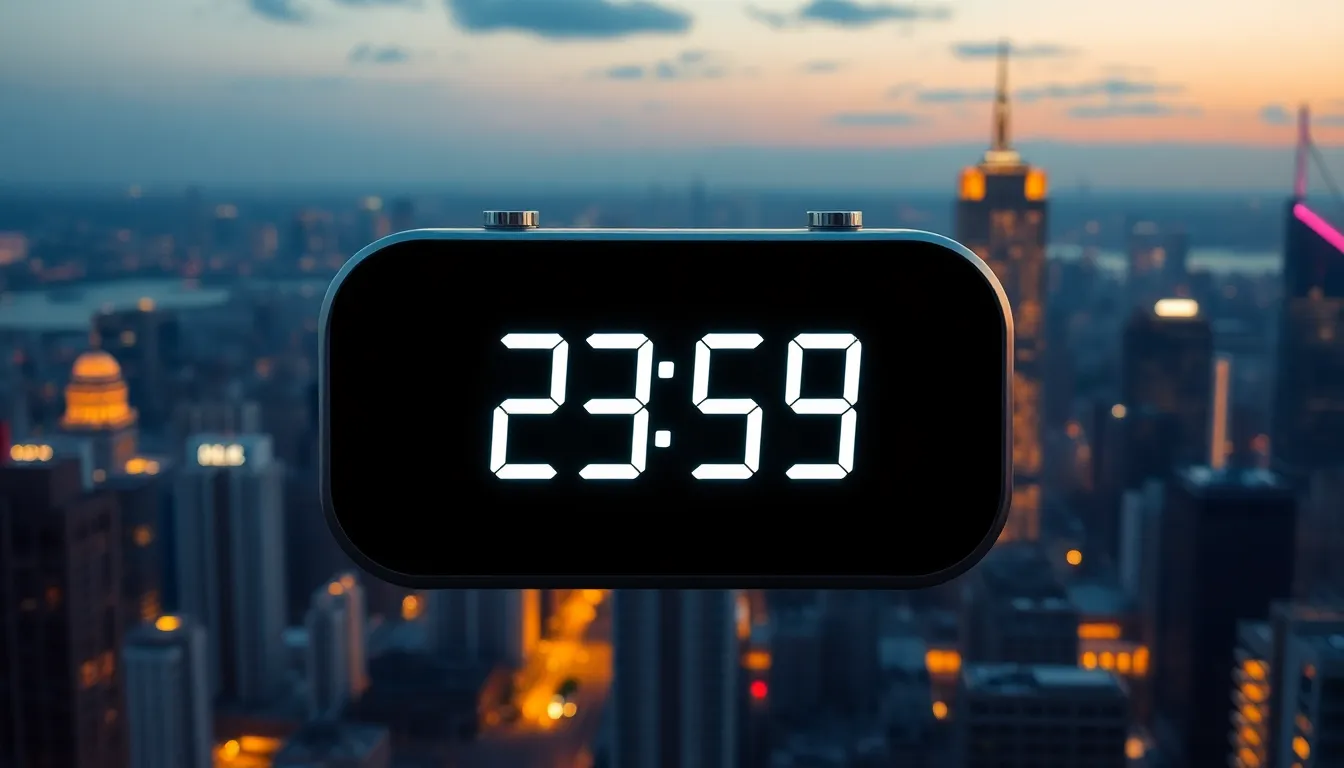
Understanding the 24-hour time system enhances clarity in daily scheduling. This format, often referred to as military time, eliminates ambiguity in representing hours.
Explanation of Military Time
Military time operates on a numbering system from 00 to 23. Each hour of the day receives a unique value. For example, 1:00 PM correlates to 13:00 in military time. Observers find that this format simplifies scheduling, especially in transportation and healthcare. Time is expressed without the use of “AM” or “PM,” reducing confusion. Users appreciate its precision when communicating time-sensitive events. Many countries adopt this system, particularly in professional environments where accuracy matters.
Conversion to 12-Hour Time
Converting from 24-hour time to 12-hour time involves a simple process. For hours greater than 12, subtracting 12 results in the PM designation. For instance, 15:00 becomes 3:00 PM. Alternatively, hours from 00:00 to 11:59 remain unchanged, except for the addition of “AM.” Therefore, 09:00 translates to 9:00 AM. Familiarity with these conversions aids in understanding schedules globally. Different cultures embrace both formats, emphasizing the importance of clarity in timekeeping.
What Time Is 23:59?
23:59 marks the last minute of the day in the 24-hour time format. This time signifies the transition from one day to the next, creating a sense of anticipation as midnight approaches.
Definition and Context
23:59 indicates one minute before midnight, concluding the day at 11:59 PM in a 12-hour format. The time represents a fleeting moment, often characterized by celebrations or reflections as individuals prepare for a new day. Understanding 23:59 is essential for scheduling, especially in contexts like transportation or events, where precision drives efficiency. Many cultures recognize the significance of this hour and its transition, often embodying both closure and new beginnings.
Comparison with Other Times
Comparing 23:59 with various times offers valuable context. For example, 00:00 represents the exact start of a new day. The difference between 23:59 and 00:00 symbolizes the shift from one day to another. Additionally, observing 12:00 PM versus 23:59 highlights how they represent different times of day. Each offers a unique perspective on daily life. Understanding the distinctions aids in grasping time’s broader implications, especially for global communication and scheduling.
Importance of Knowing Time
Knowing the time holds significant value in daily life and various contexts. It fosters punctuality and minimizes confusion when scheduling events or activities.
Everyday Implications
Awareness of time affects daily routines and commitments. Time influences how individuals manage appointments, travel, and social interactions. Being late can create misunderstandings, especially in professional environments. Recognizing 23:59 serves as a reminder that time is not just a number but a factor shaping experiences. Celebrations often occur as midnight approaches, denoting the end of one day and the beginning of another. Clear communication about time minimizes conflicts and ensures everyone remains on the same page.
Scheduling and Planning
Effective scheduling relies heavily on time accuracy. Coordinating meetings, travel arrangements, and events requires precise time understanding. Flight schedules, for example, utilize 23:59 to indicate critical deadlines for boarding and departures. In many industries, being punctual enhances professionalism and reliability. Planning daily activities around specific times cultivates better time management skills. This knowledge extends beyond personal life, impacting global communication and international business. Clear distinctions between times can streamline collaboration and operations across time zones.
Understanding the significance of 23:59 goes beyond simply noting the time. It represents a unique moment filled with anticipation and reflection as one day gives way to another. This fleeting minute serves as a pivotal reference point in both personal and professional contexts, emphasizing the need for accuracy in scheduling and communication.
As individuals navigate their daily lives, recognizing the importance of time fosters punctuality and enhances overall efficiency. Whether coordinating meetings or celebrating milestones, the awareness of 23:59 and its implications can greatly influence experiences and interactions. Embracing this understanding enriches life’s moments and ensures seamless transitions in a fast-paced world.